Running costs
What a pan actually costs per meal, over twelve years
Price divided by meals, plus the electricity to heat it and the tax added at the till. Why the cheapest pan on the shelf is the dearest per meal.
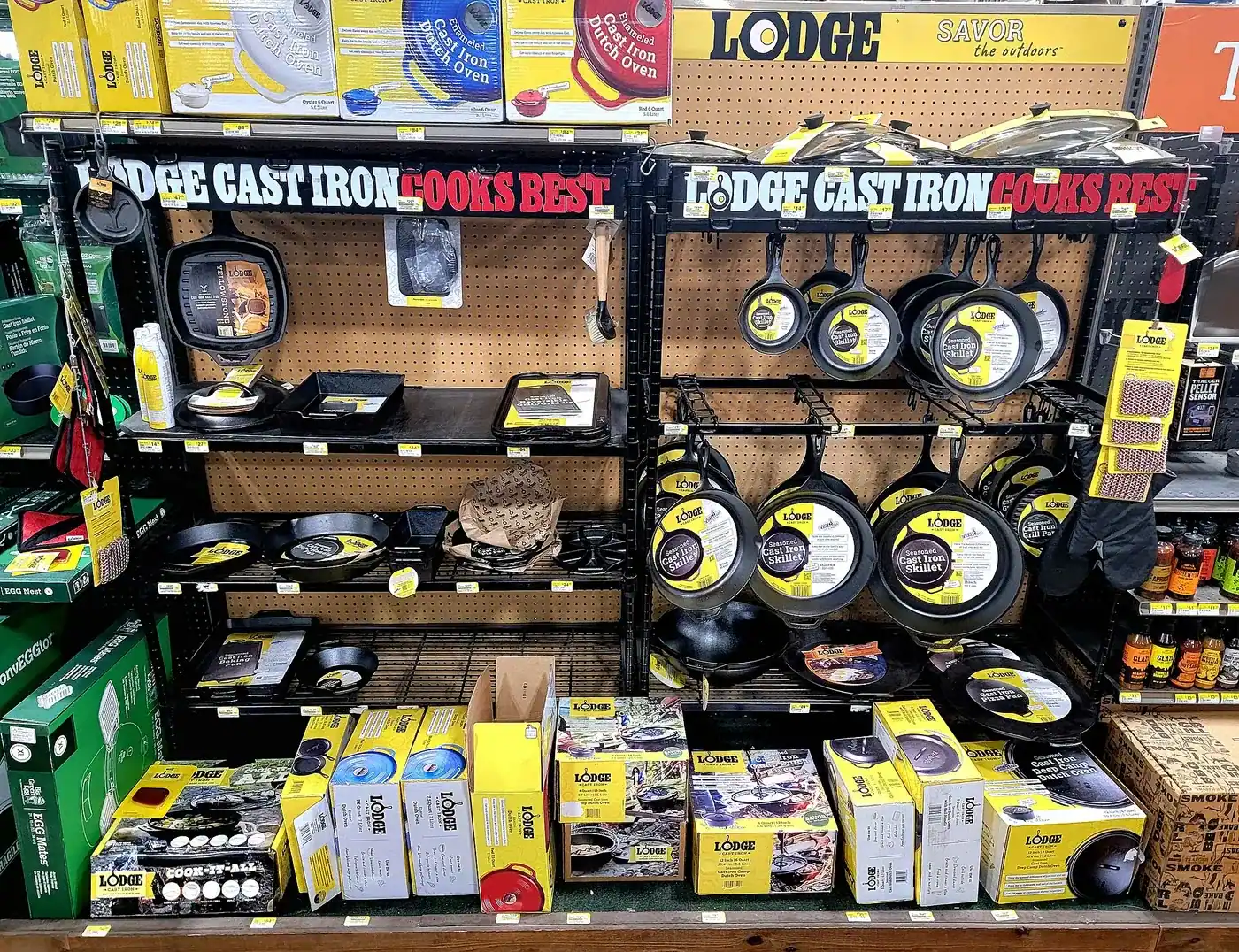
A pan's price tag is the wrong number because it is not divided by anything. What a pan costs is its price divided by the meals it cooks before it leaves the kitchen, and that divisor is set by the material and the washing-up routine rather than by the shelf label.
This guide works through the three costs that are actually recurring: the pan spread over its life, the electricity to heat it, and the sales tax that Canadian retailers add at the till rather than printing on the shelf. The cost-per-serving and running-energy calculators on this site take your own figures for all three.
Advertisement
One division decides the ranking
Take 4 cooked meals a week, which is 208 meals a year, and a 12-year horizon, which is 2,496 meals. A $45 bare cast iron pan that survives the whole period costs about 2 cents a meal. A $110 tri-ply stainless pan over the same 2,496 meals is about 4 cents. A $160 enamelled cast iron pan is about 6 cents.
A $45 non-stick pan is the interesting case. Replaced every 3 years because the coating wears, it is bought four times in 12 years, which is $180 for 2,496 meals, or about 7 cents a meal. It is both the cheapest pan on the shelf and the dearest pan in the drawer, and nothing about that conclusion depends on brand or on testing.
The gap looks small until you multiply it back. Five cents a meal across 2,496 meals is $125, which is more than the price of any single pan in this guide. That is the whole argument for buying a pan you can repair, re-season or simply ignore for a decade.
| Pan | Example price | Times bought in 12 years | Total spent | Cost per meal |
|---|---|---|---|---|
| Bare cast iron, 26 cm | $45 | 1 | $45 | about $0.02 |
| Tri-ply stainless, 26 cm | $110 | 1 | $110 | about $0.04 |
| Enamelled cast iron, 26 cm | $160 | 1 | $160 | about $0.06 |
| Non-stick, 26 cm, replaced every 3 years | $45 | 4 | $180 | about $0.07 |
Each cell is total spent divided by 2,496 meals. Example prices, not quotations. Change the replacement interval in the cost-per-serving calculator and the ranking of the last two rows moves.
Electricity is small per meal and visible per year
Heating is the second recurring cost and it is easy to compute because it is only watts multiplied by time. An induction hob rated 2,000 W searing for 20 minutes uses about 0.67 kWh, which is 10 cents at an assumed 15 cents per kWh. An electric oven rated 2,400 W roasting for 60 minutes uses 2.4 kWh, or about 36 cents.
Preheating is the line people forget. Fifteen minutes of preheat on the same 2,400 W oven is 0.6 kWh and about 9 cents, every time, whether or not the food needed it. Across 208 oven meals a year that is roughly $19 of preheat alone, which is about half the price of the cast iron pan.
Rated power is a maximum, and elements and induction coils cycle on and off, so a plug-in meter will read lower than this arithmetic. The figures show the shape rather than the bill. Natural Resources Canada does require an EnerGuide label on electric ranges, cooktops and ovens, so the appliance that heats the pan has a published annual consumption figure even though the pan itself has none.
| What is running | Rated power | Time | kWh | Cost |
|---|---|---|---|---|
| Induction hob, searing | 2,000 W | 20 minutes | 0.67 | $0.10 |
| Electric coil hob, simmering | 1,200 W | 45 minutes | 0.90 | $0.14 |
| Electric oven, preheat only | 2,400 W | 15 minutes | 0.60 | $0.09 |
| Electric oven, roasting | 2,400 W | 60 minutes | 2.40 | $0.36 |
Watts multiplied by hours, divided by 1,000, multiplied by $0.15. Use the rating on your own appliance's plate and the rate on your own bill in the running-energy calculator.

GST/HST is added at the till, not on the shelf
A $435 three-pan purchase is not a $435 purchase. The Canada Revenue Agency's rate table puts the tax at $21.75 in the provinces and territories charging 5%, $56.55 in Ontario at 13%, $60.90 in Nova Scotia at 14% since 1 April 2025, and $65.25 in New Brunswick, Newfoundland and Labrador and Prince Edward Island at 15%. The spread between the cheapest and dearest band on that basket is $43.50.
Put the tax back into the per-meal figure and the ranking is unchanged but the numbers move. The $45 cast iron pan in Ontario costs $50.85 at the till, which across 2,496 meals is still about 2 cents a meal. The four non-stick pans cost $203.40 in Ontario, which is about 8 cents a meal rather than 7.
Several provinces in the 5% band also charge their own retail sales tax, which the federal GST/HST table does not list. The reliable approach is to take the till receipt from your own province as the real purchase price and run the division from there.
| Where you buy | Rate | Tax | Till total |
|---|---|---|---|
| Alberta, BC, Manitoba, NWT, Nunavut, Quebec, Saskatchewan, Yukon | 5% | $21.75 | $456.75 |
| Ontario | 13% | $56.55 | $491.55 |
| Nova Scotia | 14% | $60.90 | $495.90 |
| New Brunswick, Newfoundland and Labrador, Prince Edward Island | 15% | $65.25 | $500.25 |
Rates from the Canada Revenue Agency table. Provincial retail sales taxes charged alongside the 5% GST in some provinces are not included here.
Ordering from outside Canada changes the sum again
Cookware is heavy, which makes cross-border shipping expensive, and the border adds its own two thresholds. Under the Canada Border Services Agency's courier imports remission order, goods shipped by courier from the United States or Mexico are free of customs duty at a value for duty of $150 or less and free of sales and excise taxes at $40 or less. From anywhere else the courier threshold is $20.
A $160 enamelled casserole from a United States seller is therefore above both thresholds: duty may apply and tax will. A $35 set of pan scrapers from the same seller normally arrives with neither. The courier's own handling fee is separate from all of this and is charged whether or not any duty is assessed.
The Courier Low Value Shipment programme itself covers goods with a value for duty not exceeding $3,300, so everything in this guide falls inside it. The landed-cost calculator on this site takes the item price, the shipping, the origin and your provincial rate and returns the figure you should compare against a Canadian shelf price.
- From the United States or Mexico by courier: duty-free at $150 or less, tax-free at $40 or less
- From anywhere else by courier: the remission threshold is $20
- The Courier Low Value Shipment programme covers a value for duty up to $3,300
- Courier handling fees are separate from duty and tax and are charged on top
- Compare the landed total, not the item price, against the Canadian till total
Putting the meal together
On the figures above, a weeknight meal cooked in a $45 cast iron pan on an induction hob for 20 minutes costs about 12 cents in equipment and energy: 2 cents of pan and 10 cents of electricity. The same meal roasted for an hour in an electric oven is about 38 cents, because the oven is 36 cents of it.
That ratio is the useful finding. Across every pan in this guide, the appliance costs three to eighteen times more per meal than the pan does, which means the cheapest way to cut the running cost of a kitchen is to use the hob instead of the oven for small quantities, not to buy a different pan.
The pan still matters, just over a longer horizon. Choosing the 2-cent pan over the 7-cent one saves $125 across 2,496 meals, and it is the only one of these decisions you make once.
Before you buy
- Count the meals you actually cook in a week and multiply by 52 before comparing two pans
- Pick a horizon long enough to include at least one replacement of the shortest-lived option
- Read the rated power off your hob and oven plates and put it into the running-energy calculator
- Use the electricity rate from your own bill rather than the 15 cents assumed here
- Add your province's GST/HST to the shelf price before dividing by meals
- Check the $40 and $150 courier thresholds before ordering cookware from the United States
- Compare the landed total against the Canadian till total, not against the shelf label
Questions readers ask
- Why is 12 years the horizon rather than 5?
- Because it is long enough for the replacement interval of a non-stick pan to show up in the arithmetic. At 3 years a non-stick pan is bought four times in 12 years, which is the only reason its per-meal cost overtakes a pan costing three times as much. Over 5 years the same comparison hides the effect almost entirely.
- Is 4 meals a week a fair assumption?
- It is the assumption used throughout so the division is visible, and it suits a household that cooks on weeknights and eats out or reheats the rest. Cooking 7 meals a week gives 4,368 meals over 12 years, which halves every per-meal figure above without changing the order of the four pans.
- Does a heavier pan use more electricity?
- It uses more to get hot and less to stay hot. A cast iron pan takes longer to reach searing temperature than a thin pan, so the preheat costs more; once there it holds the heat through the food going in, so the hob cycles off sooner. Over a 20-minute cook at 2,000 W the two effects largely cancel, and the figure stays near 10 cents.
- Should I count the dishwasher in the cost per meal?
- Only if the pan changes how often you run it. A dishwasher cycle costs the same whether it contains one pan or three, so a stainless pan that goes in costs nothing extra while a cast iron pan that must be washed by hand costs about 2 minutes of your time. Natural Resources Canada requires an EnerGuide label on dishwashers, so the cycle's energy figure is published.
- Is it cheaper to buy cookware from the United States?
- Only above a fairly high price, because shipping heavy cookware eats the gap. Under $40 a courier shipment from the United States arrives free of sales and excise taxes and under $150 free of customs duty, so small accessories can be genuinely cheaper. A $160 casserole is above both thresholds, so it carries tax, possibly duty and the courier's handling fee.
Sources
- Canada Revenue Agency — GST/HST rate by province and territory — checked 2026-11-03
- Canada Border Services Agency — Memorandum D8-2-16, Courier Imports Remission Order — checked 2026-11-03
- Canada Border Services Agency — Courier Low Value Shipment Program — checked 2026-11-03
- Natural Resources Canada — EnerGuide label for appliances and room air conditioners — checked 2026-11-03
Some links on this site can earn us a commission. That does not change which product a guide recommends, and it adds nothing to your price.